I took over an undocumented MVP and designed the system Equinix's product line runs on.
SmartView is Equinix's DCIM platform for monitoring power, cooling, and hardware across global data centers. I inherited the MVP with almost no documentation, rebuilt it for four device classes, and designed the grid later adopted across the Equinix product line.
- Client
- Equinix, global data center provider
- Role
- Lead Product Designer, took over at MVP
- Scope
- 6 monitoring subsystems, 4 device classes, team of 10+
- Market
- Enterprise DCIM, ~$20B+ opportunity
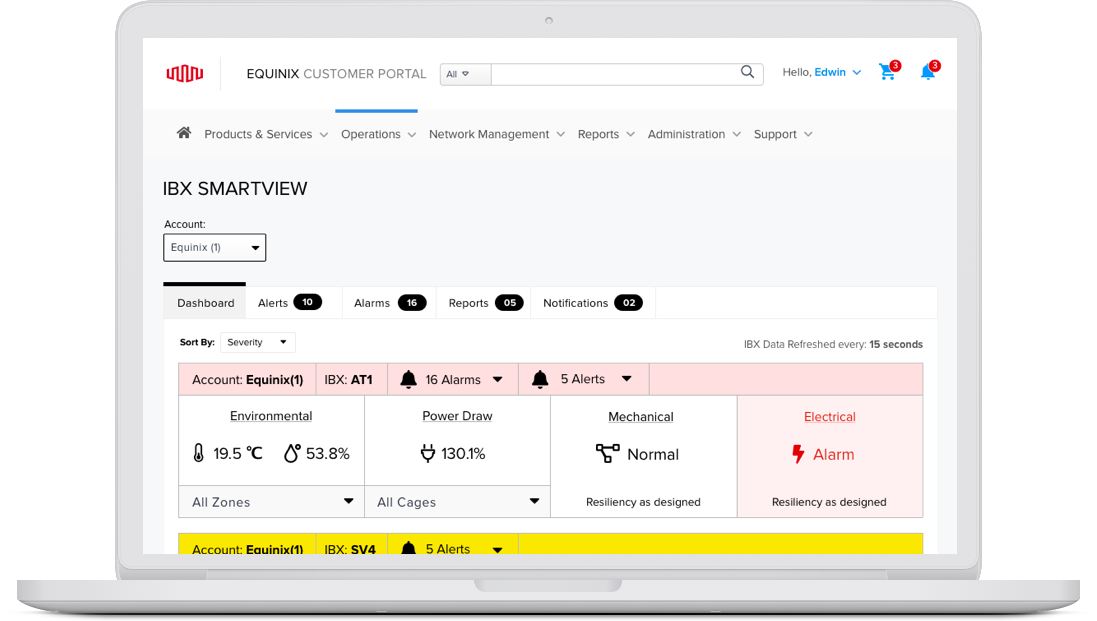
The MVP had shipped without a shared design record.
Equinix launched SmartView for the enterprise DCIM market. The MVP was desktop-only and arrived with almost no documentation. I needed to reconstruct the product model while the roadmap kept moving.
- 01Inherited mid-stream at the MVP stage, with no design system and no source-of-truth docs.
- 02Desktop-only in a market that needed technicians working from anywhere, on any device.
- 03A grid pattern that could not carry six data-heavy monitoring subsystems.
- 04Customers already pushing back on the parts that shipped: long asset lists, buried real-time data.
Three changes gave the product a foundation.
I reconstructed the system before redesigning it.
No documentation meant no shared model. I reverse-engineered the MVP into a sitemap, a research-backed persona, and user flows. That gave the ten-person team one picture of the product and recovered decisions that had never been documented.
I designed one responsive grid for six subsystems.
The useful result extended beyond SmartView. I built a grid on a Material foundation for desktop, tablet, and mobile. It carried all six monitoring subsystems and was later adopted as the grid standard across the Equinix product line.
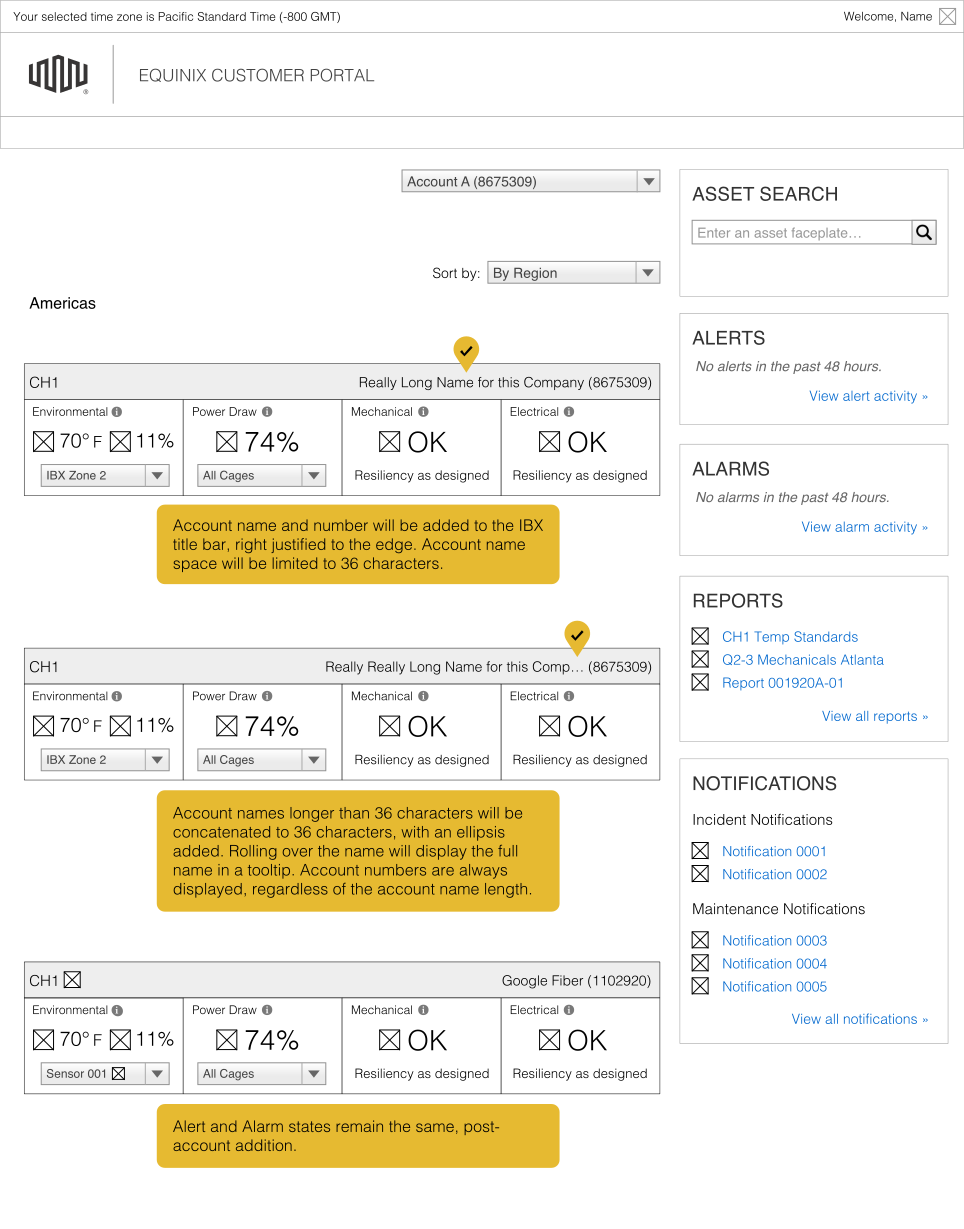
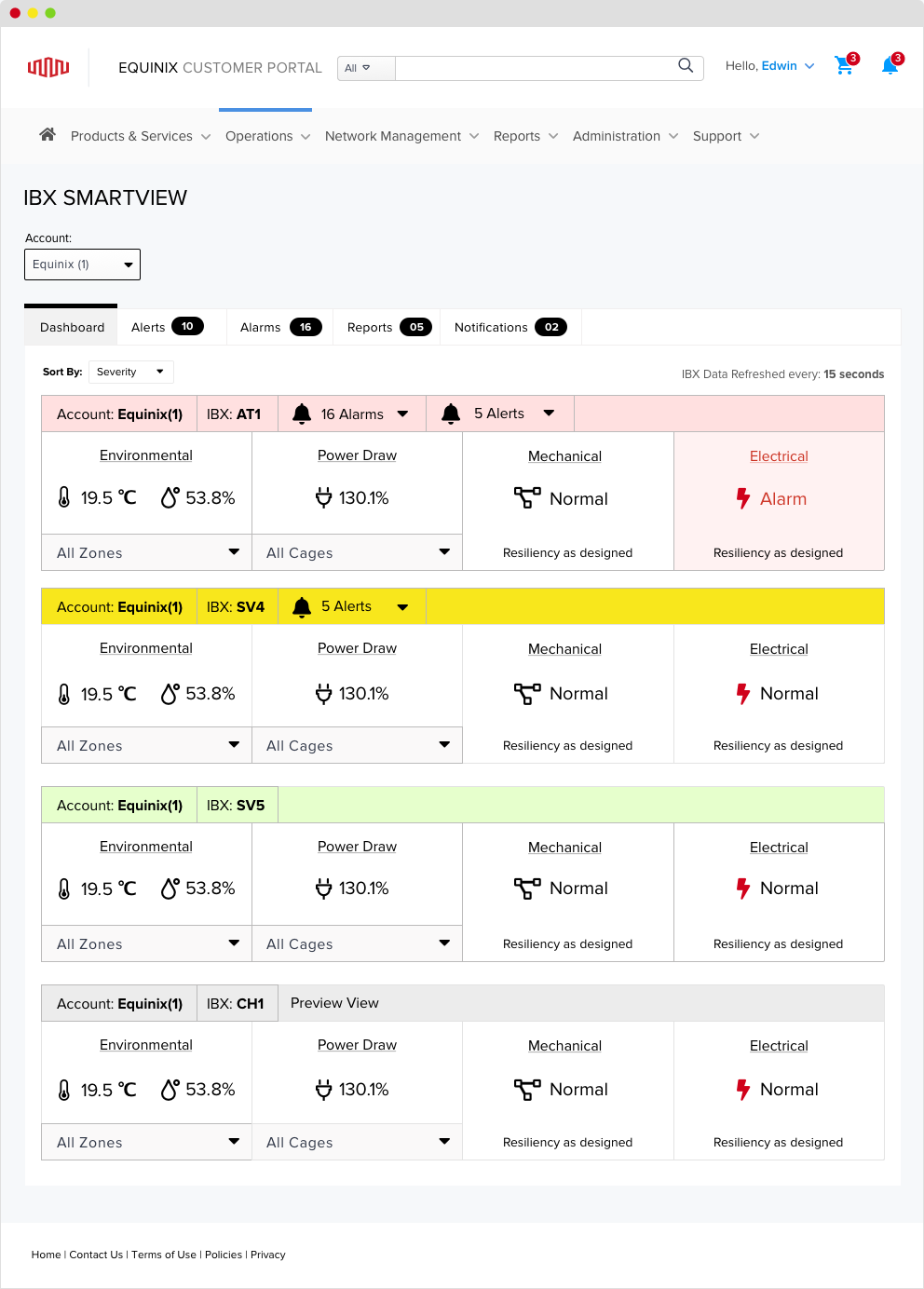
I removed the grid where customer work did not fit it.
Consistency had limits. Users struggled with long asset lists in the Mechanical section, so I replaced the grid with a directory-tree UI, assets sectioned on the left, detail on the right. The same instinct drove the Environmental redesign: MVP feedback said people wanted real-time data first, so I moved it above the trends.
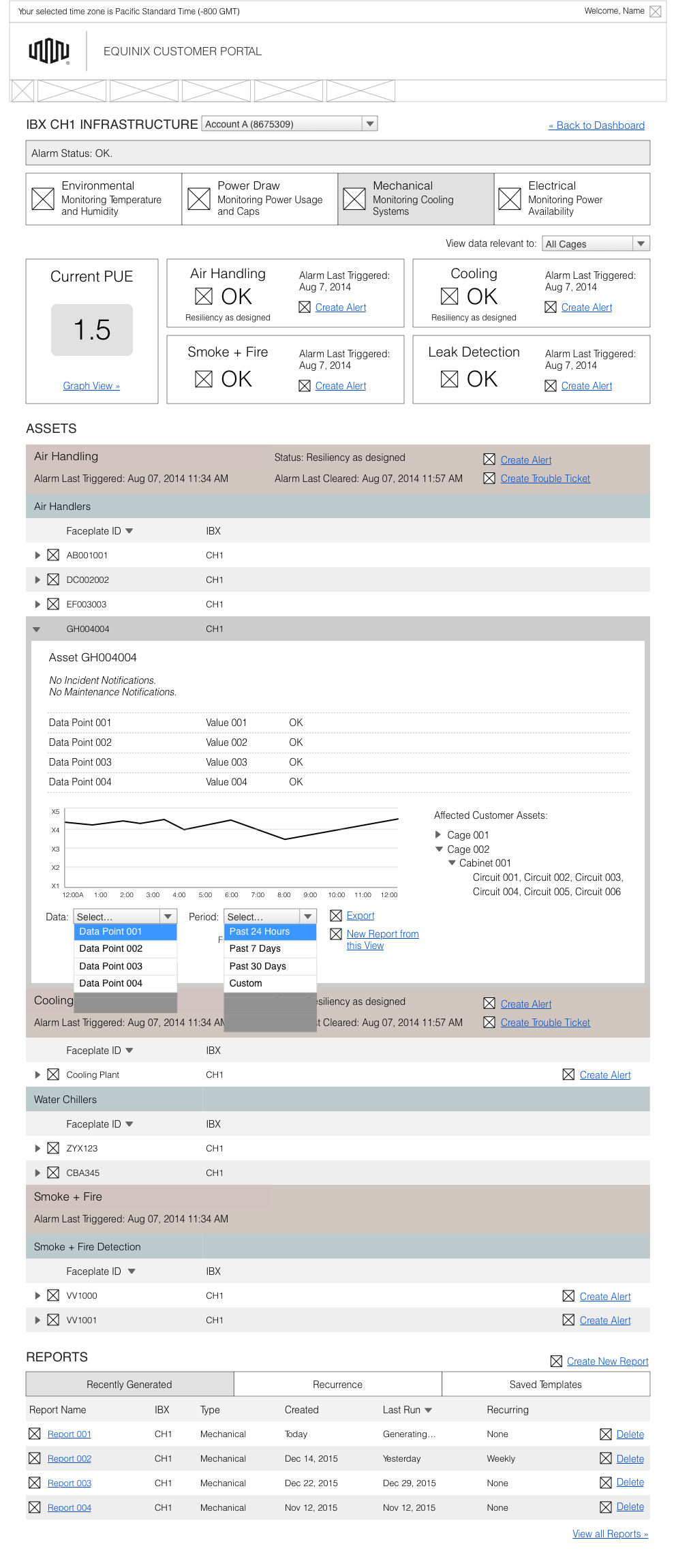
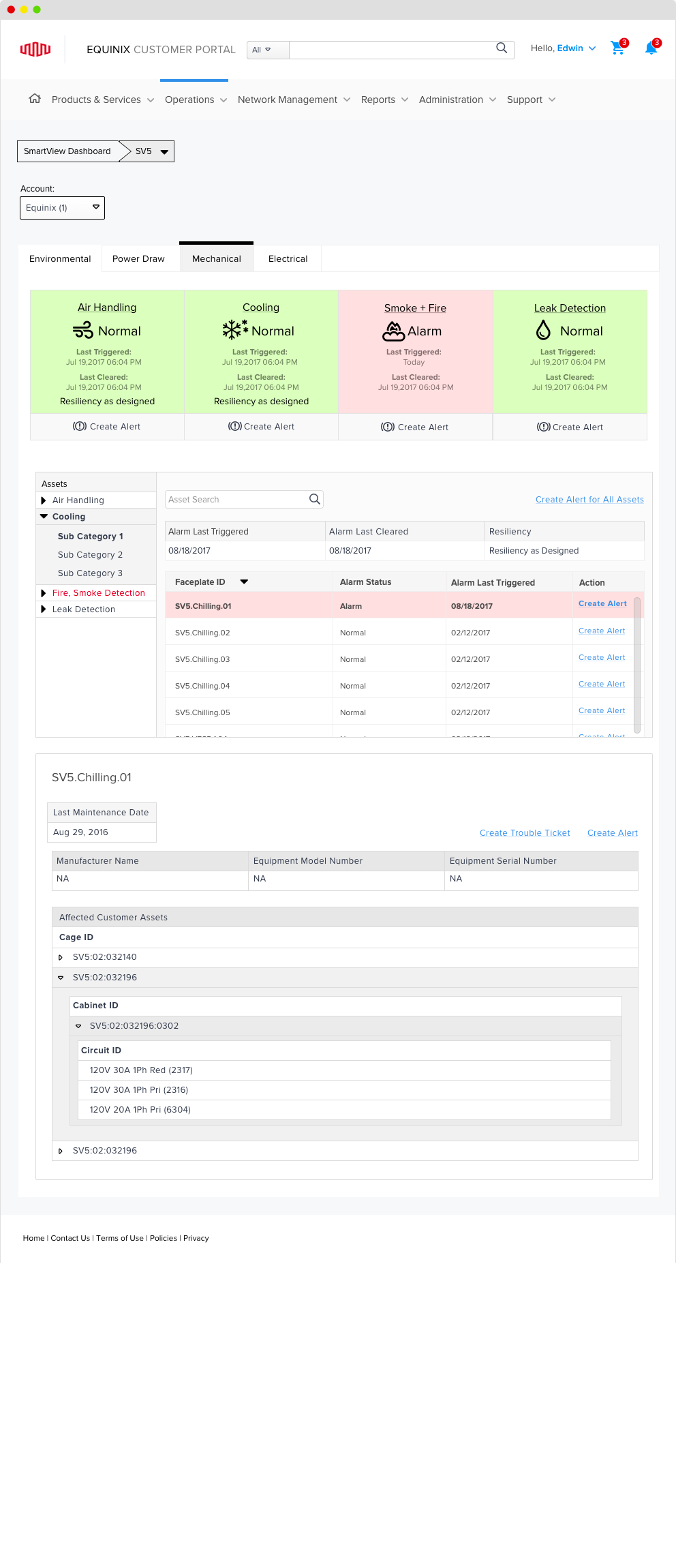
One modular template carried six subsystems.
Once the first section worked, Environmental, Power, Mechanical, Electrical, Alarms, and Alerts could share the same responsive structure. Reusing those modules reduced design and development work while still supporting real-time and historical data.
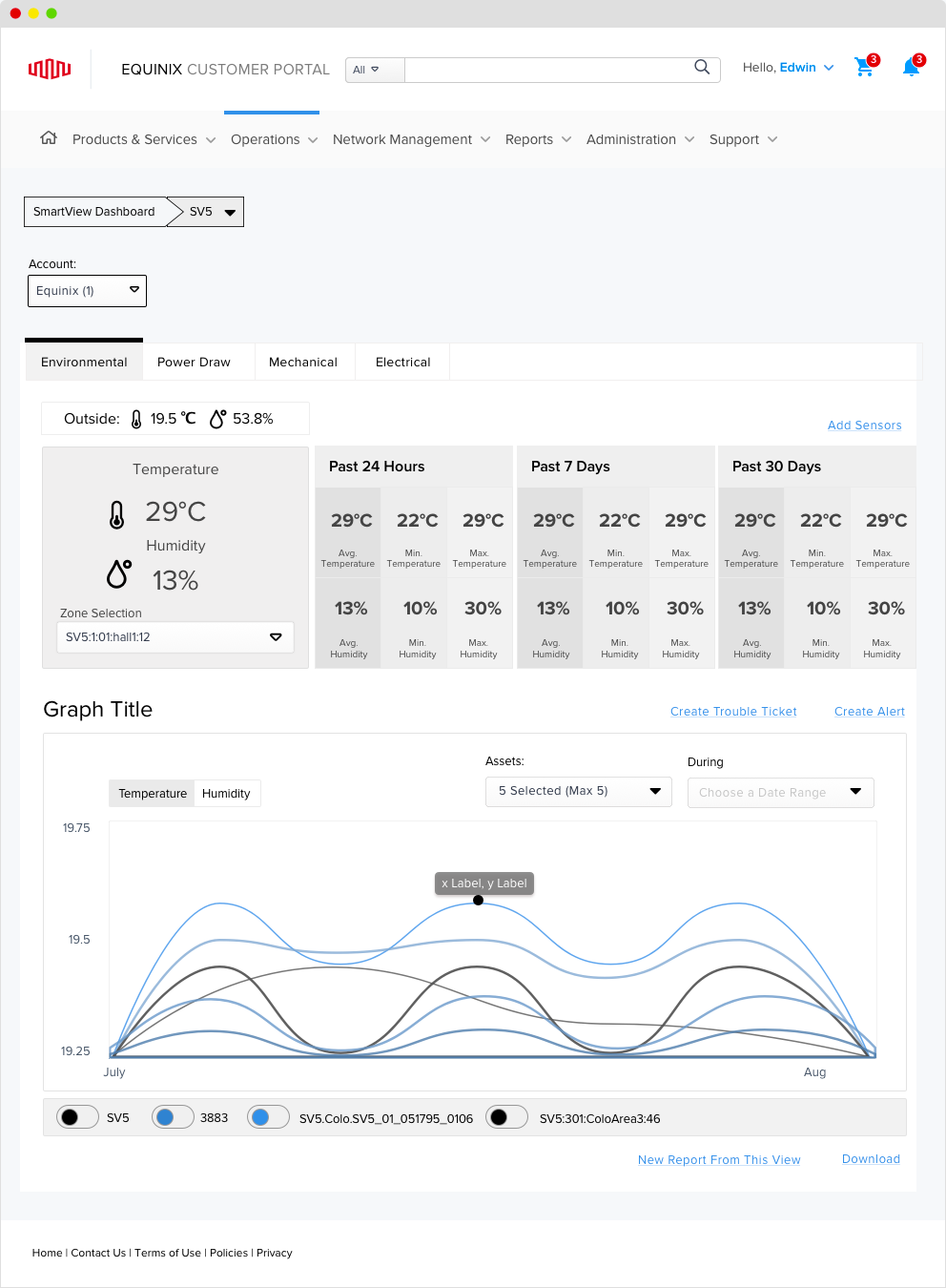
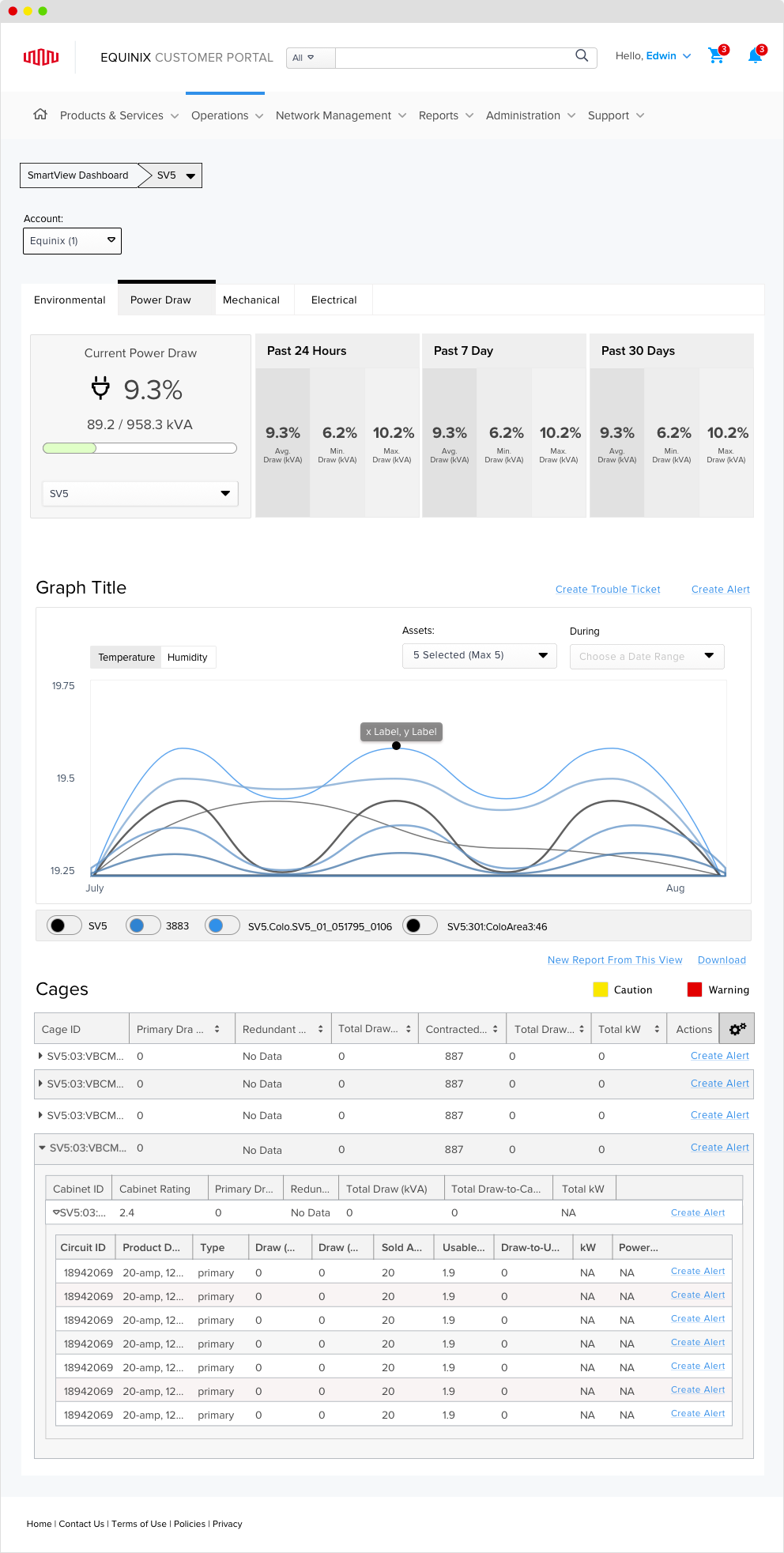
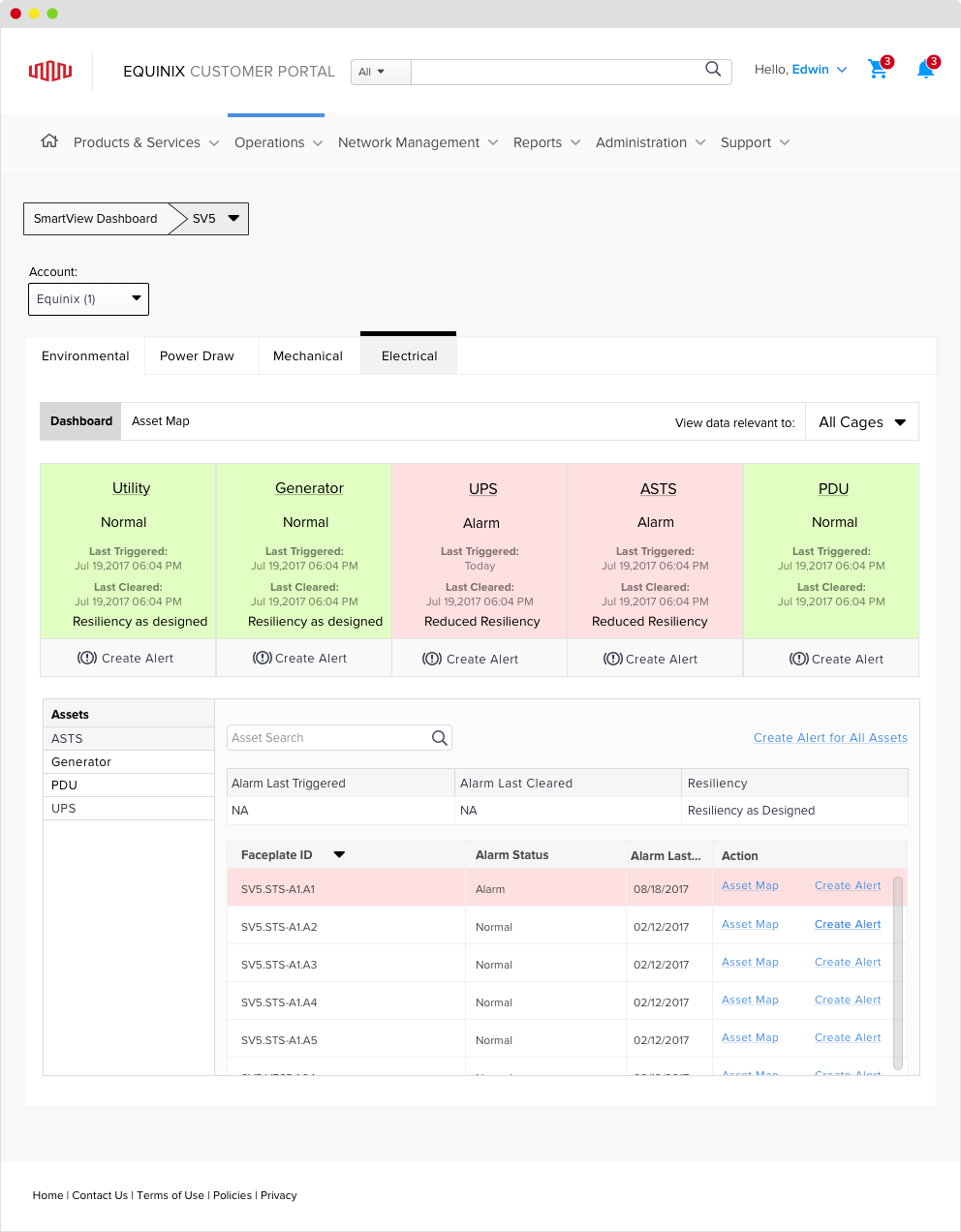
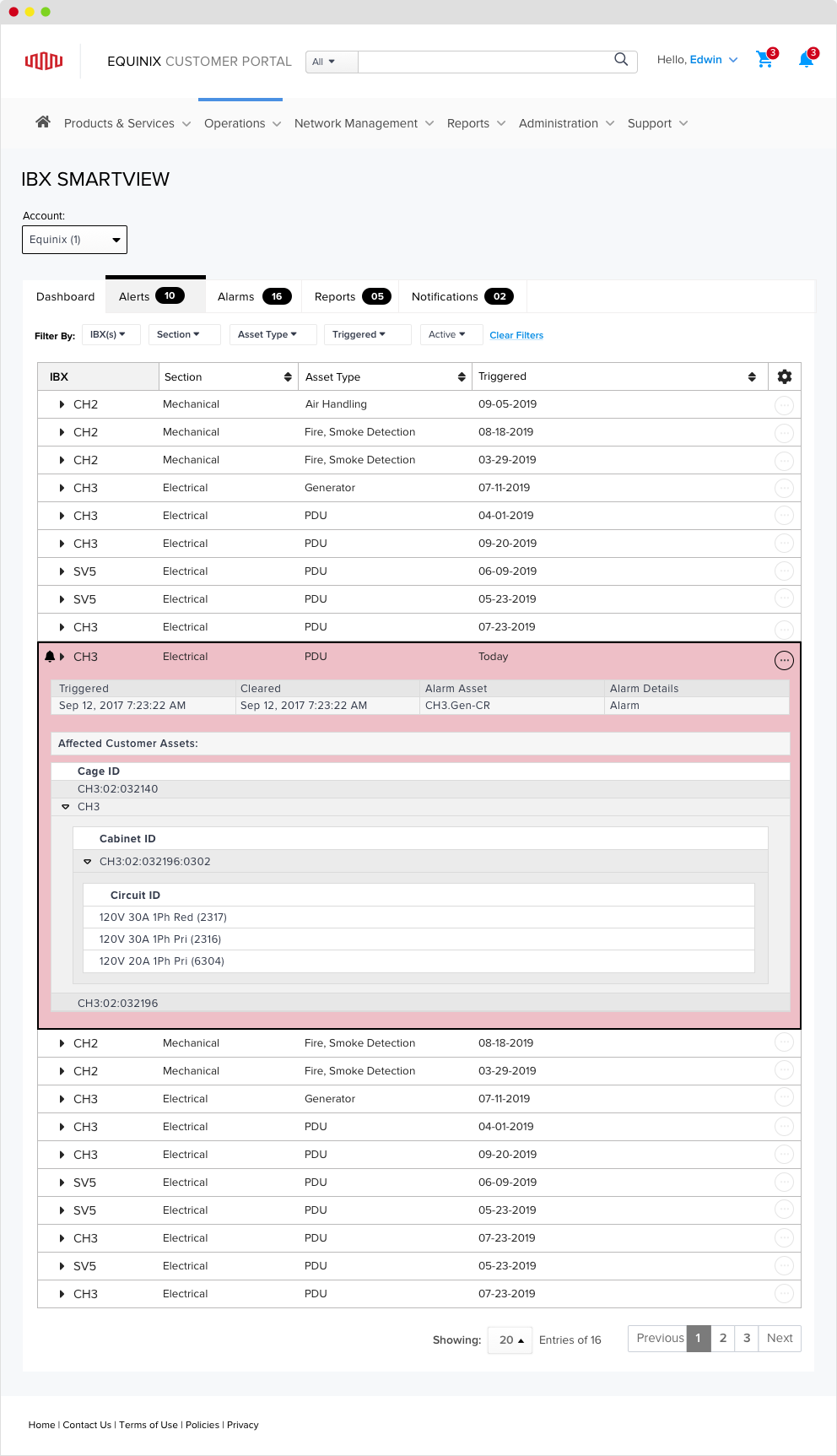
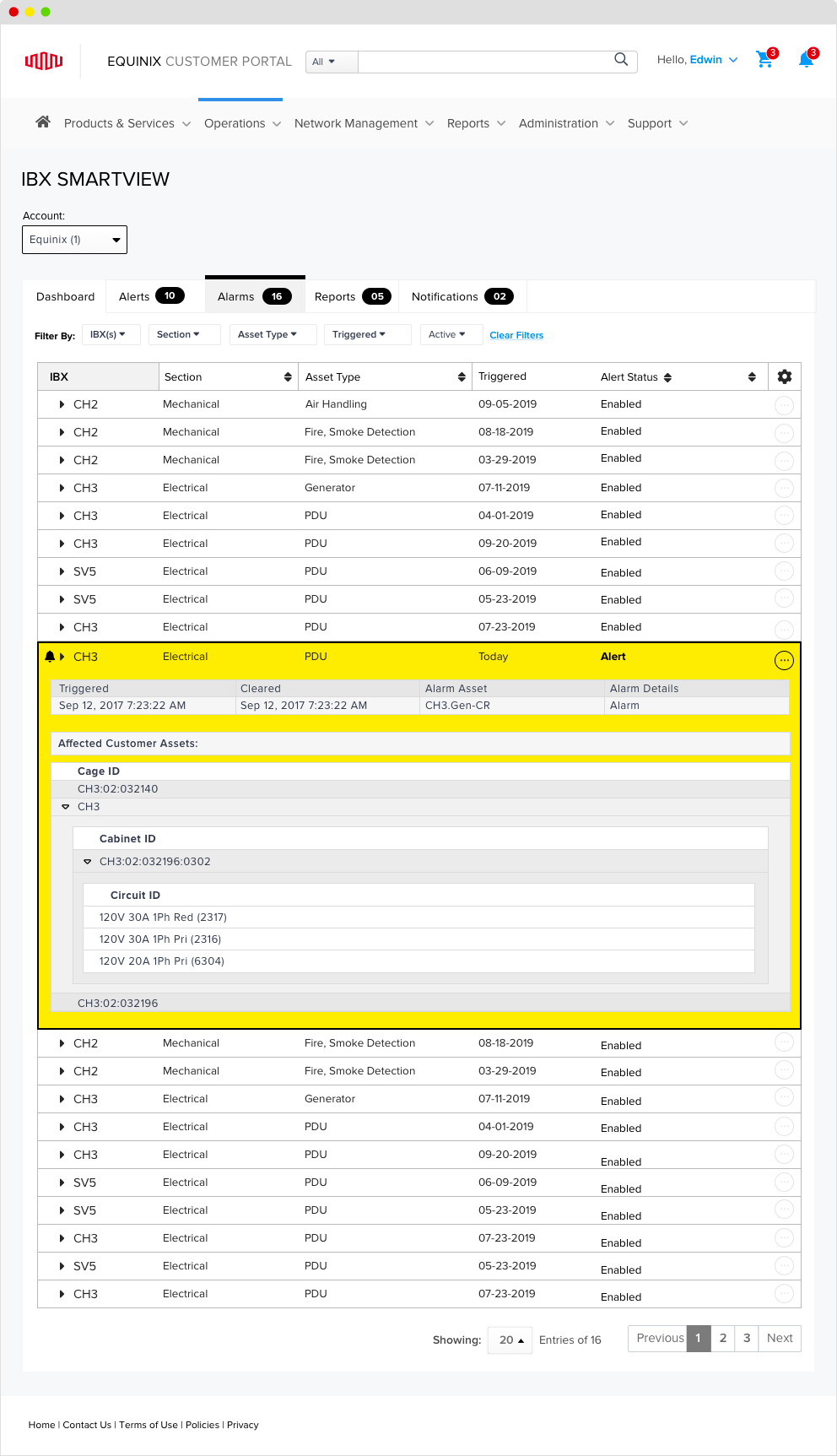
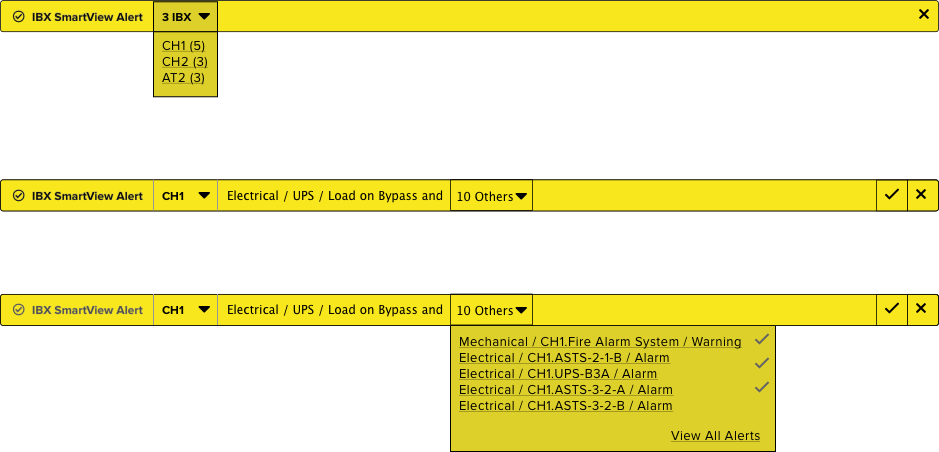
The MVP became a responsive product and a system that outlived the project.
The SmartView grid became the shared grid across the Equinix product line. The work solved the immediate responsive problem and gave other product teams a pattern they could reuse.
Scope note: I handed off during detailed visual design, so I do not claim SmartView's final launch or usage numbers. The documented result is the responsive rebuild and the grid system's product-line adoption. Adoption and usage metrics are available on request.