
jason_
Jason Poindexter / PortfolioDesign leadership + production AIStart a conversation
JASONPOINDEXTER
Menu
Case study

Pogo had fifty games and twenty-one years of product history. Players wanted three clear paths.

EA brought me in to lead the redesign around the jobs that kept players returning: find a challenge, play it, and get back to a favorite game.

Client
Electronic Arts
Role
Lead UX and product manager
Engagement
November 2018 to March 2019
Release
Global launch, March 2020

Case study details

The product
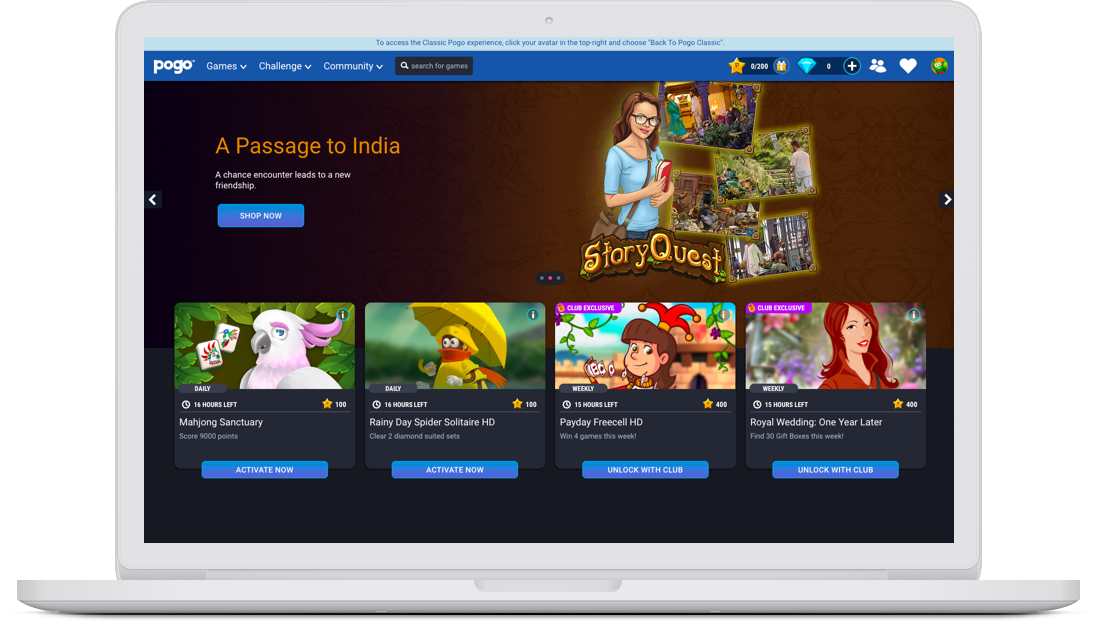
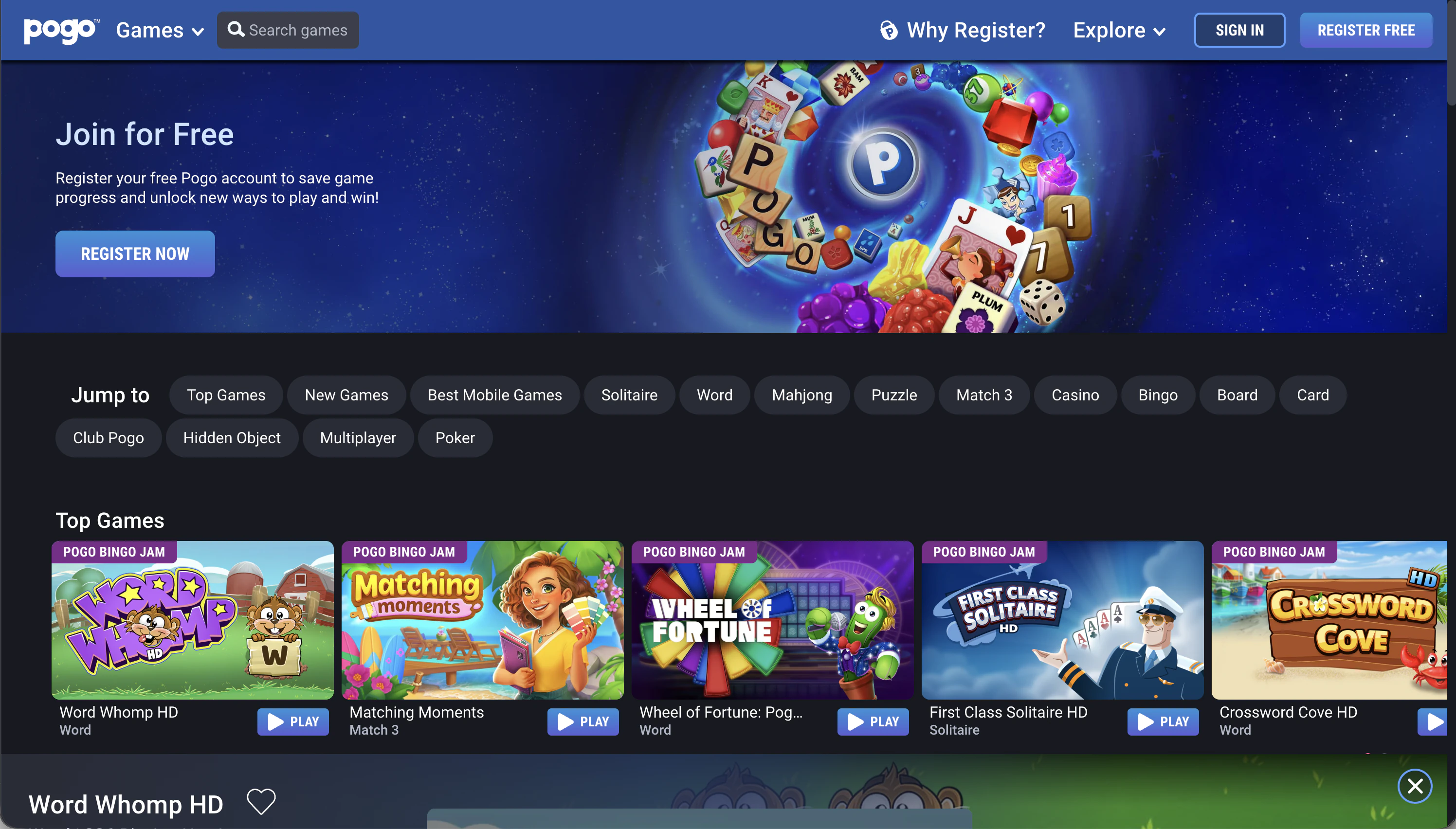
The live Pogo.com home page shown inside a silver laptop
Pogo.com home page, captured from the live site.
01 / The brief

Problem

Pogo had grown across JavaScript, Flash, HTML, and mobile generations without a shared structure. More than fifty games sat inside a product whose navigation, category pages, challenges, account tools, and social features had accumulated over two decades.

Players reported avoiding navigation they did not understand. Game tiles did not make their contents clear, and the pages that mattered most buried challenge progress among material players rarely used.

Response

The release-one plan cut the site footprint by more than half and centered it on games, challenges, and account access. A responsive grid, labeled game tiles, and a six-part challenge card gave the catalog one repeatable system.

The homepage moved active challenges first, then new content and favorites. Game details and Challenge Central reused the same hierarchy instead of creating another way to browse.

02 / Setup

Role

  • UX design lead
  • Product management
  • Vision, priorities, KPIs

Team

  • User researcher
  • Frontend and backend developers
  • Three product managers by handoff

Scale

  • 50+ games
  • $30M+ annual product
  • Global consumer platform
The process

Map the site before trying to redesign it.

03 / Method

I used five phases with iteration running through all of them. The sequence began with a full site audit because the team needed to see the product it had before deciding what the next version should keep.

01Discovery
02Define
03Ideate
04Prototype
05Implement
04 / Research goal

Validate whether two decades of player behavior still pointed to the same core jobs, then define the smallest release that could serve those jobs across desktop, tablet, and mobile.

05 / Research

What survives in the record

  • Survey of 3,400 active paying and unpaid subscribers.
  • Questionnaire based on EA's Global Segmentation Study.
  • Follow-up video conversations with seven to ten players.
  • Device usage, motivations, feelings, and task flows.
  • Google Analytics used to select responsive breakpoints.
3,400players surveyed before release-one structure was set.
06 / Constraints

Established behavior

Pogo's audience had used the product for years, often on older devices and slower connections. Familiar patterns and explicit labels mattered more than novelty.

Finite release

The team was small relative to the product footprint. I pushed for a phased launch so release one could be coherent instead of carrying every historical surface into a new shell.

07 / Existing product
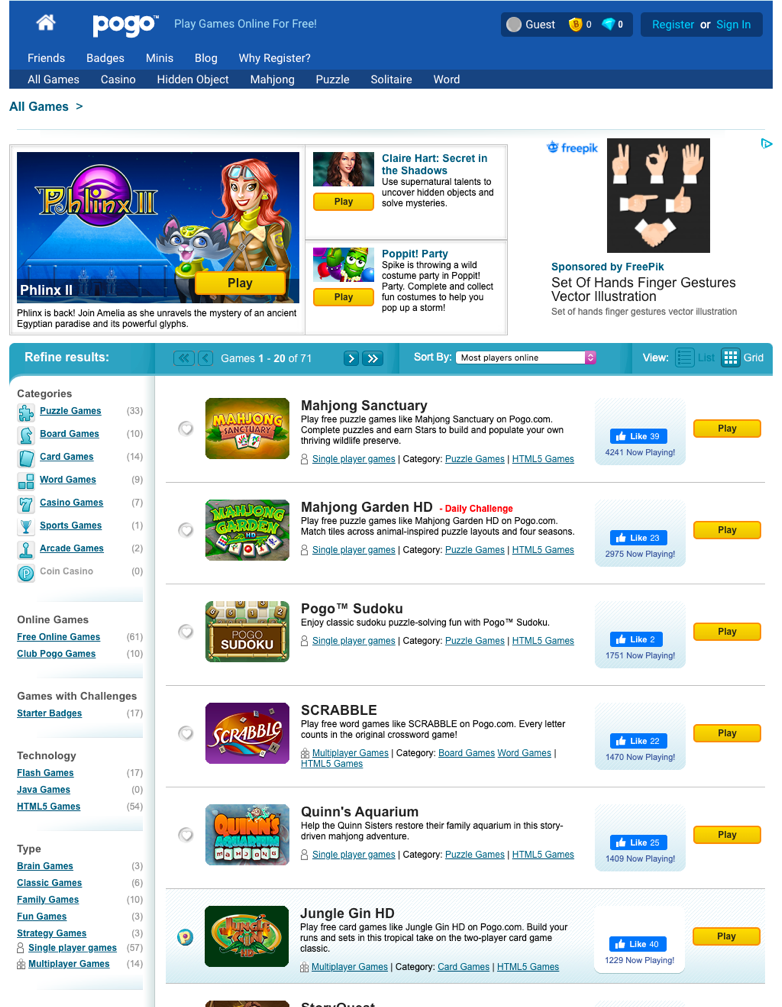
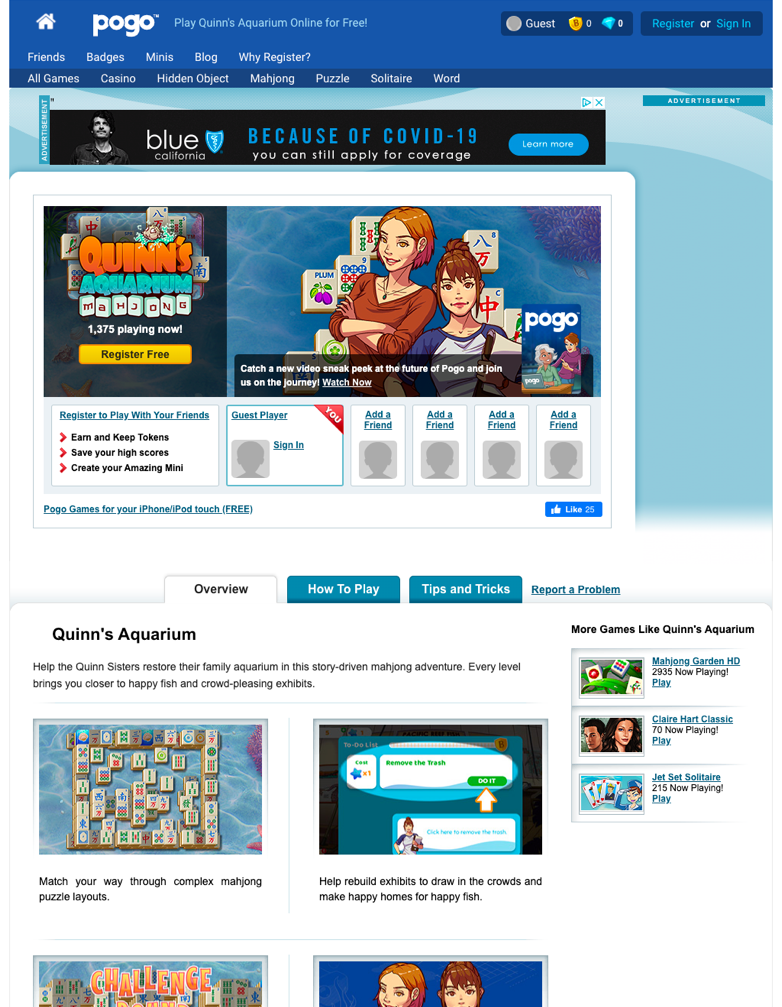
The Pogo home page before the redesign
Before: the existing home page.
The Pogo home page after the redesign
After: release-one hierarchy.
08 / Pattern comparison

This comparison is reconstructed from the project record. It explains why the team chose a catalog row pattern already familiar from streaming and shopping products.

Pattern comparison

Legacy PogoCatalog rowsRelease one
Primary scanMixed modulesHorizontal rowsChallenges, then rows
Game identityImage-ledImage and titleLarge label and category
Challenge dataScatteredNot nativeSix fields on one card
Responsive behaviorUnevenKnown pattern4, 8, 12, and 16 columns
Learning costExisting but confusingFamiliar elsewhereFamiliar pattern, Pogo language
Reconstructed analysis. No formal comparison table survives from 2018.
09 / Constraint map

Constraint map

Strengths

Internal · helpful
  • A large active player base available for research
  • More than fifty games with recurring challenge content
  • Known player motivations from EA segmentation work

Weaknesses

Internal · harmful
  • Twenty-one years of accumulated content
  • No current structural map at project start
  • Small team relative to the product footprint

Opportunities

External · helpful
  • Responsive access across the devices players already used
  • Familiar catalog patterns reduced learning cost
  • A shared grid could serve games and challenges

Threats

External · harmful
  • Older hardware and slow connections
  • A large change could disorient established players
  • Carrying every legacy page would stall release one
Reconstructed from the project record. No SWOT artifact survives.
10 / Player voice
“Too many levels and too many links, I don't even use or know what most of this is.”
Player interview, navigation research
11 / What the research changed

The loop was smaller than the site

Across the research, the durable jobs were to find a challenge, play it, and return to a favorite game. That became the release-one filter.

Recognition had to beat recall

Players could not reliably identify games from artwork alone. Larger tiles, visible titles, categories, progress, time, and reward moved the needed information into the scan path.

12 / Who it is for

Five player segments were refreshed from the survey. The percentages shown are the ones preserved in the project file. The surviving record does not name the remaining fourteen percent, so this case does not assign them.

Player segments

Segmentation: n=3,400
Curious Solver56%
memory · intellectual challenge · learning
Steady Advancer8%
accomplishment · self-challenge
Reward Seeker8%
free rewards · real money
Imaginative Creator7%
role-play · nurture · imagination
Belonger7%
community · friendship · belonging
Source: EA Customer Insights · Global Segmentation Study
Primary persona
MW
Martha White
67 · Salt Lake City, UT · Retired
Motivation
Stay sharp mentally, stay connected to a community.
Constraints
Older devices · slow connection · fixed income · low tolerance for visual noise.
Behavior
Bookmarks her favorite game. Skips navigation entirely.
Player segments

Martha White

Primary persona · Curious Solver
Context
67, retired, Salt Lake City. Uses older technology and slower internet.
Needs
Responsive access, clear labels, low learning cost, and visible progress.
Goals
Stay mentally sharp, meet friends, and feel a sense of accomplishment.

Platform requirement

Design consequence
Content
Game name and category cannot depend on the picture alone.
Challenges
Task, time, event, progress, and reward belong together.
System
The same pattern must hold from four to sixteen columns.
13 / How might we

How might we make the next meaningful action clear without asking established players to relearn Pogo?

How might we carry fifty games and recurring challenges through one responsive system?

How might we cut the first release without cutting the reasons players return?

14 / Decisions and alternatives

The original deck does not preserve formal alternative boards. These are the actual choices described in the project record, with the rejected path stated only where the record makes it clear.

Release scope

Phased releaseKeep the core loop coherent and let the platform grow with purpose.Taken
Carry the full legacy footprintPreserves every page, but exceeds the team and weakens release one.Rejected

Browsing pattern

Familiar catalog rowsA known pattern, adapted to challenges, favorites, and new games.Taken
Another bespoke module systemMore new behavior for an audience asking for less complexity.Rejected by the stated direction

Category and challenges

One shared gridDifferent content, identical scan and interaction pattern.Taken
Separate page systemsMatches the old organization, but adds another pattern to learn and maintain.Rejected
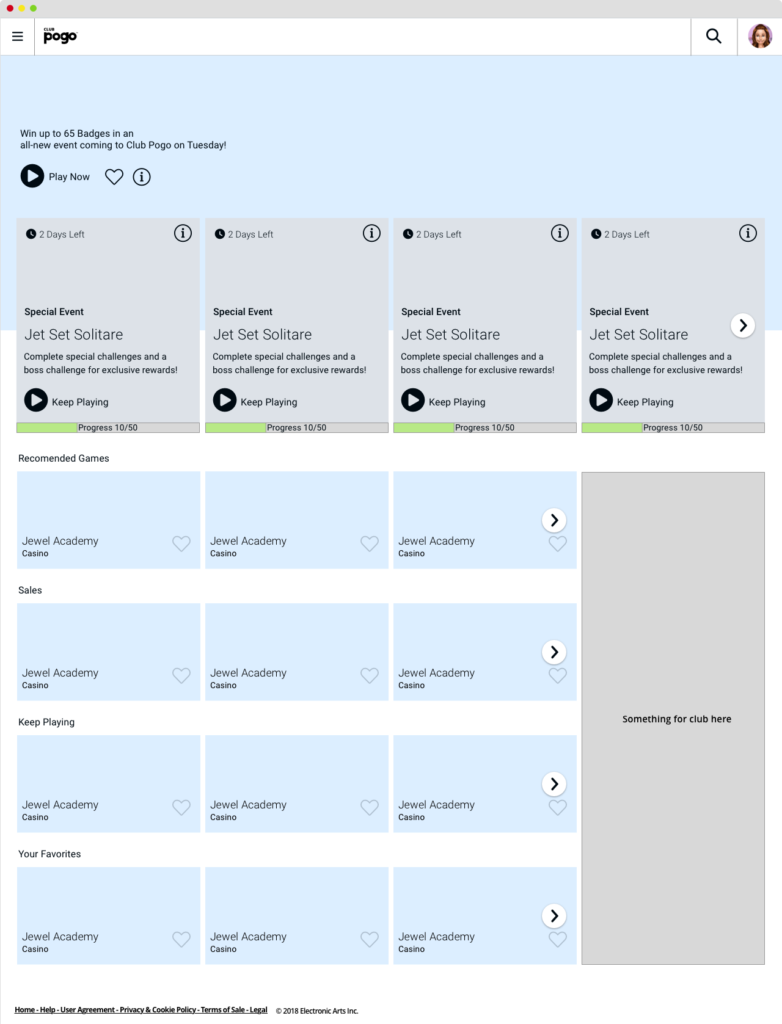
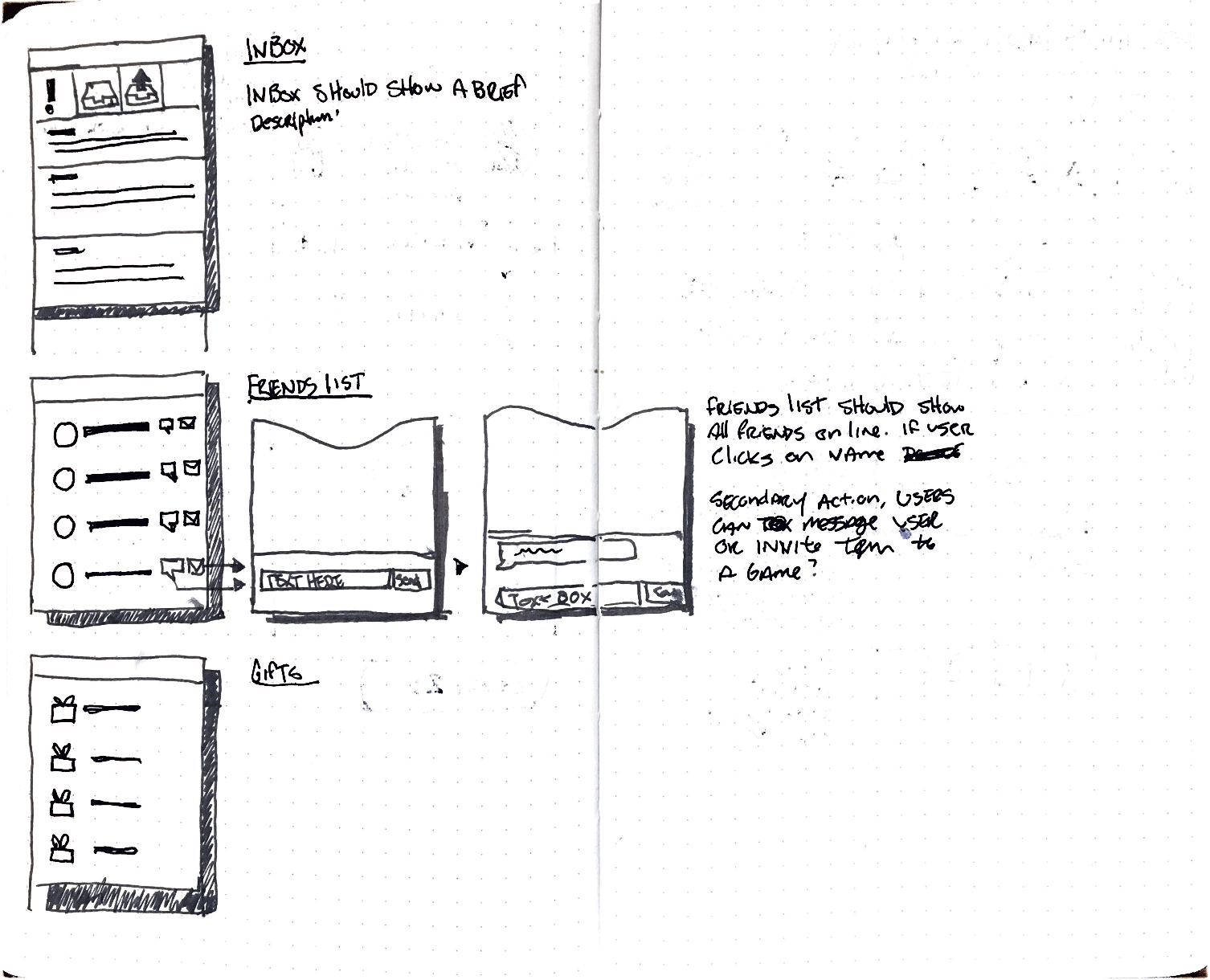
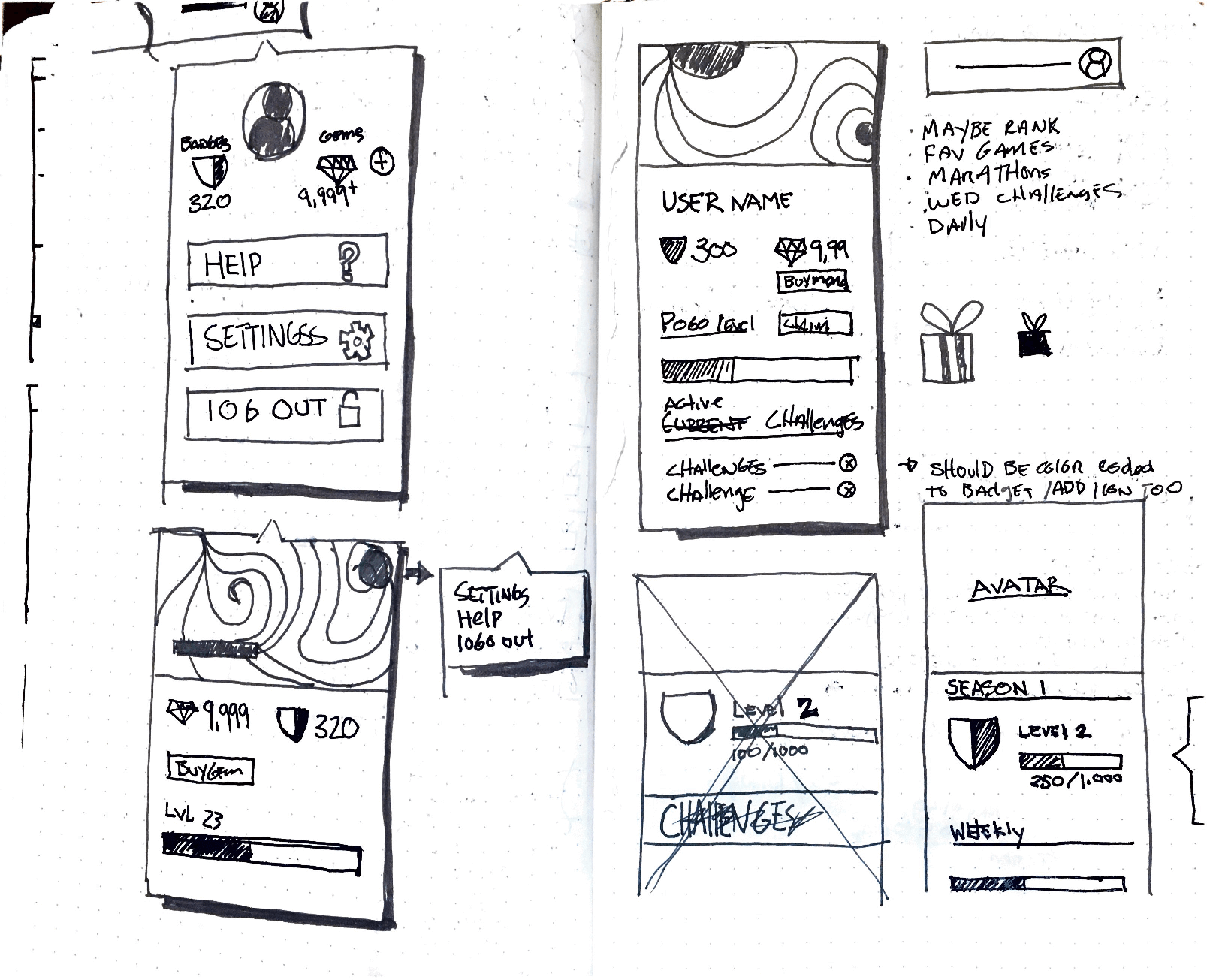
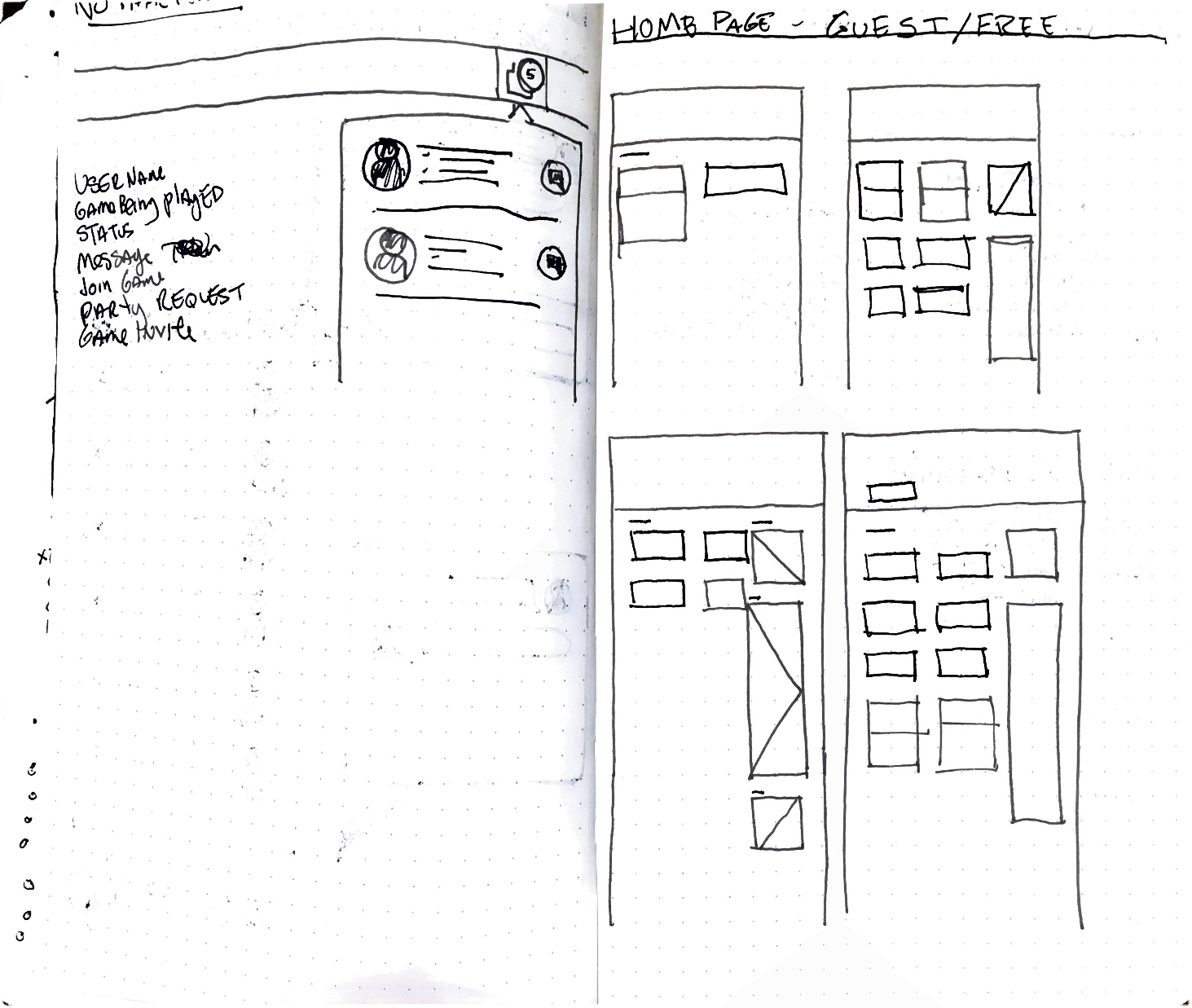
Early Pogo interface sketch
Early iteration sketch 01.
Pogo layout study on grid paper
Early iteration sketch 03.
Pogo responsive layout sketch
Early iteration sketch 05.
15 / Structure

From inherited pages to player jobs

The first audit mapped the current site. User flows then separated destinations that served the core loop from historical surfaces that could wait. The release sitemap grouped the retained product under games, challenges, and account access.

Current-state sitemap

01

The inherited home page exposed thirteen peer destinations

14 nodes2 levels0 gates
  • Home
    • Badges
    • Minis
    • Blog
    • Tournaments
    • Friends
    • Forums
    • Why sign up?
    • My account
    • Search
    • Add Gems
    • Games
    • Gifts
    • Shopping cart
  • Destination
  • Gate, not a page
Node-for-node redraw of the surviving current-state map. The flat first level shows the accumulated navigation cost.

Archived release sitemap

02

The archived release still carried repeated game and account branches

44 nodes5 levels0 gates
  • Home
    • User profile
      • Personal details
      • Block list
      • Player card
      • Billing
      • Security
    • Blog
    • Help
    • Challenge Central
      • Mix and Match
      • Quest Challenges
      • Season details
    • Store
      • Shopping cart
        • Checkout
          • Success
    • Subscriptions
    • Friends
    • Messages
      • Inbox
      • Sent
    • Test feedback
    • Games
      • Word
        • Game badges
        • Game details
      • Casino
        • Game badges
        • Game details
      • Hidden Object
        • Game badges
        • Game details
      • Mahjong
        • Game badges
        • Game details
      • Solitaire
        • Game badges
        • Game details
      • Puzzles
        • Game badges
        • Game details
      • Badges
      • Challenges
  • Destination
  • Gate, not a page
Node-for-node redraw of the surviving release map. Repeated game branches remain because they are part of the archived evidence.
16 / Sitemap

The accessible tree below is a simplified transcription of the release sitemap. It preserves the named destinations while removing repeated category branches that would make the same structure harder to read on a portfolio page.

Release-one sitemap

03

The release structure groups the product around games, challenges, and account access

37 nodes4 levels0 gates
  • Home
    • Find a game
      • Games
        • Word
        • Casino
        • Hidden Object
        • Mahjong
        • Solitaire
        • Puzzles
      • Game detail
        • Challenges
        • Screenshots
        • Related games
    • Find a challenge
      • Challenge Central
        • Mix and Match
        • Quest Challenges
        • Season details
      • Challenge card
    • Account
      • Profile
        • Personal details
        • Block list
        • Player card
        • Billing
        • Security
      • Friends
      • Messages
        • Inbox
        • Sent
      • Store
        • Shopping cart
        • Checkout
        • Success
      • Subscriptions
      • Help
      • Test feedback
  • Destination
  • Gate, not a page
Transcribed and simplified from the surviving release-one sitemap. No new destination has been added.
17 / The inherited surface

Twenty original screens, kept as evidence.

These one-page PDFs are the surviving legacy product inventory. They show why a homepage redesign alone would not have fixed Pogo: games, profiles, friends, tournaments, badges, forums, and avatar tools each carried their own structure.

18 / The core loop

The product could be reduced because the player's recurring story was short. Challenge discovery and game discovery are different entry points into the same act of play.

Find a challenge

Scan the active events and understand the task, time, progress, and reward.

Choose the game

Recognize a labeled title or move directly from a challenge into its game.

Play

Launch the game without a detour through pages that do not support the task.

See progress

Return to the same challenge card and see what remains.

Collect the reward

Complete the challenge, then repeat with a favorite or newly discovered game.

19 / Flows

Three complete player paths

The original flow artifact names player goals but does not preserve every state. The diagrams below reconstruct branches and return paths from those goals and the released screens. They are marked as reconstruction, not original 2018 deliverables.

User flows

04

Three player goals share one short loop back to play

01
Return to a favorite game

Get a returning player from the home page to a familiar game with one recoverable sign-in check.

  1. PlayerOpen Pogo01
  2. PogoShow the home page and recent games02
  3. PogoCheck whether the player is signed in03
  4. PlayerChoose a favorite game04
  5. PogoLoad the game detail and play action05
  6. PlayerLaunch the game06

ContinueSigned-in players move directly from favorites to play.

RecoverSigned-out players authenticate, then return to the same favorite row.
02
Find and complete a challenge

Carry the challenge, time limit, progress, and reward into the game and back again.

  1. PlayerOpen Challenge Central01
  2. PlayerFilter by event and choose a challenge02
  3. PogoShow task, time, progress, and reward03
  4. PogoCheck whether the challenge is still active04
  5. PlayerLaunch the linked game and play05
  6. PogoUpdate progress and award completion06

ContinueAn active challenge launches its game and returns with updated progress.

RecoverAn expired challenge returns the player to an equivalent active option.

03
Discover a new game

Let category labels and related games support browsing without interrupting the path to play.

  1. PlayerOpen Find a game01
  2. PogoShow the labeled game catalog02
  3. PlayerChoose a category and game03
  4. PogoShow game detail, challenges, and related titles04
  5. PlayerDecide whether this game fits05
  6. PlayerLaunch the selected game06

ContinueA good fit moves directly from detail to play.

RecoverRelated games return the player to a scoped catalog instead of a dead end.

Reconstructed from recorded player goals and surviving release surfaces. Each task includes the branch that keeps the player moving instead of ending at an error or expired state.
20 / Screen map

This map separates three kinds of evidence: screens preserved in the archive, recreations built from those files, and destinations named in the sitemap with no surviving final drawing.

Screen map

05

Seven screens carry every named route in the released core loop

7 screens4 sections14 transitions
01
Home
  1. Archived screenHome

    See all challengesChallenge Central

    Open a gameGame detail

    Browse the catalogGame catalog

  2. Rebuilt from filesMobile home

    Open a gameGame detail

02
Games
  1. Archived screenGame catalog

    View game detailsGame detail

    Return homeHome

  2. Archived screenGame detail

    Play the gameHome

    Browse related gamesGame catalog

    See all challengesChallenge Central

03
Challenges
  1. Archived screenChallenge Central

    Open the gameGame detail

    Inspect a challengeChallenge card

  2. Rebuilt from filesChallenge card

    Launch the gameGame detail

    Choose another challengeChallenge Central

04
Account
  1. Named onlyAccount hub

    Return homeHome

Every screen states its provenance and outbound routes. Transition counts are derived from the same screen data.
21 / Delivery architecture

The original implementation repository does not survive. This reconstruction stays at the level the project evidence supports: player intent, responsive interface, shared content patterns, product destinations, and the legacy platform below them.

Delivery architecture

System architecture

Player intent moves through one responsive content system.

reconstructed

Reconstructed from the surviving project record. No implementation repository survives, so this diagram describes the delivery architecture evidenced by the released screens, grid rules, and content model. It does not claim a specific software stack.

01
Player intentThe three recurring jobs preserved in release one
Find a challengeReturn to a favoriteDiscover a game
02
Responsive interfaceOne hierarchy from four to sixteen columns
Home rowsGame catalogChallenge gridGame detail
03
Shared content patternsRecognition and progress without page-specific rules
Game tileChallenge cardCategory labelProgress and reward
04
Product destinationsThe retained release-one structure
GamesChallenge CentralProfileFriendsStore
05
Legacy platformExisting accounts, game launches, social data, and commerce
AuthenticationGame servicesPlayer dataTransactions
Execution sequence
  1. Player enters through home, catalog, or Challenge Central
  2. The responsive shell preserves the same scan order
  3. Shared cards expose name, category, task, progress, time, and reward
  4. A selection routes to game, challenge, or account destination
  5. The legacy platform completes authentication, play, progress, or purchase
  6. The player returns to the same labeled context
22 / Wireframes

These low-fidelity frames were rebuilt for this case from the recovered sitemap, player goals, responsive grid, and released screens. They document structure without pretending to be lost originals.

Wireframes

Primary navigation
Active challenges
New this week
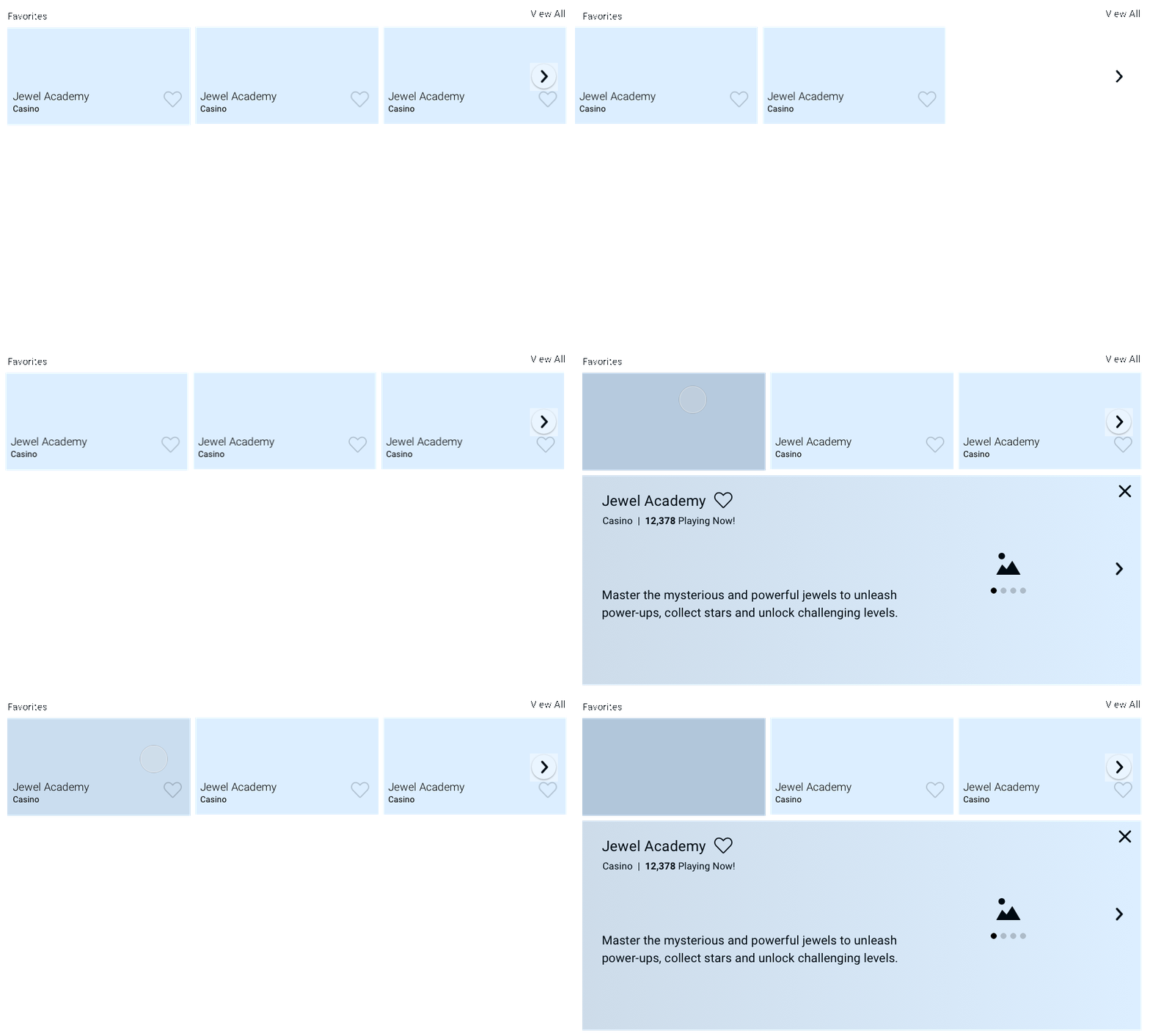
Favorites

Home

Challenges first, then new content and favorites.

Primary navigation
Category filters
Game and category
Game and category
Game and category
Game and category

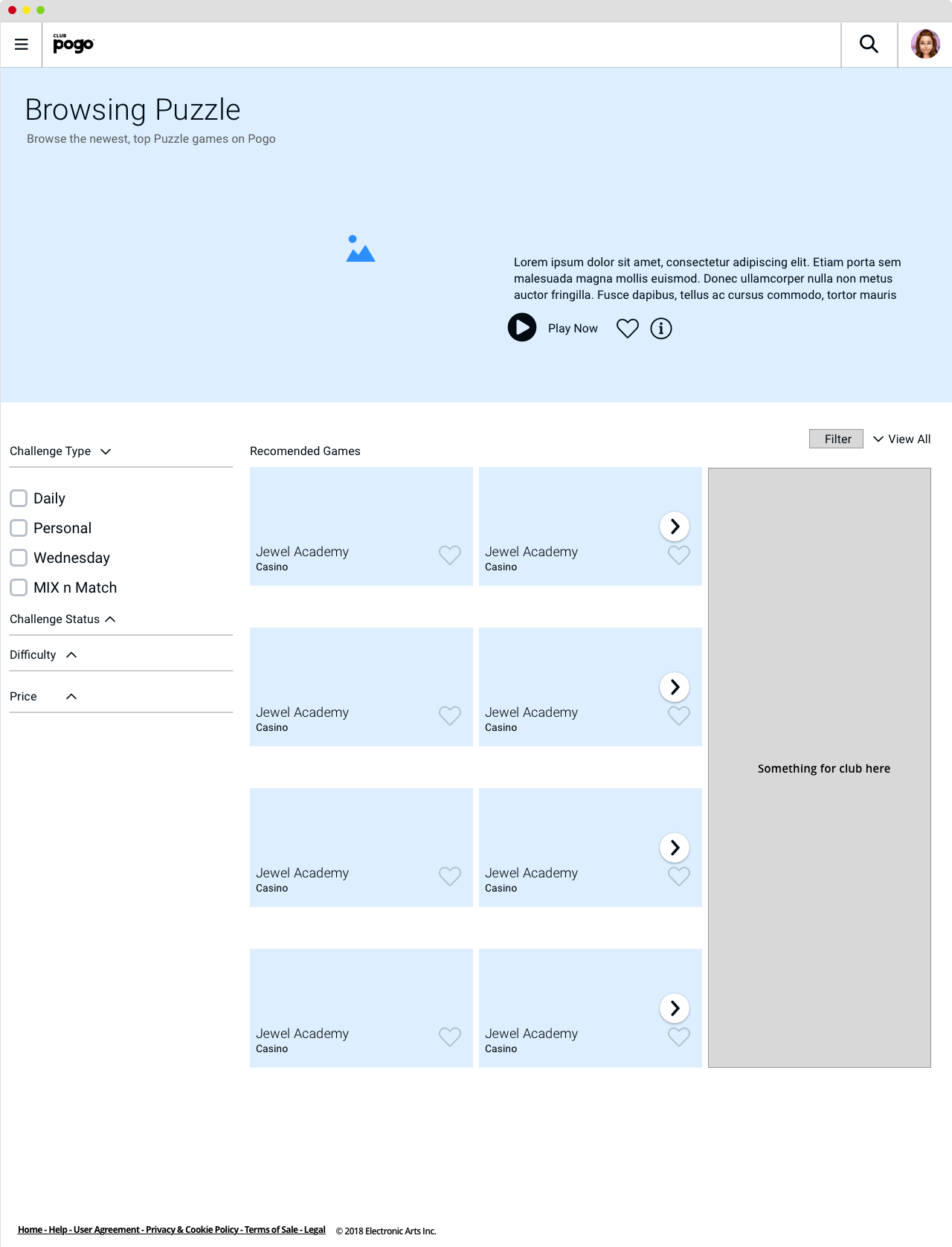
Game catalog

One labeled grid for browsing by category.

Primary navigation
Event filters
Challenge card
Challenge card
Challenge card

Challenge Central

One filter and one repeatable six-field card.

Breadcrumb
Game hero
Play and details
Available challenges
Related games

Game detail

Play action, challenges, screenshots, then related games.

Menu and account
Active challenges
Game
Game
Load more

Mobile home

The same hierarchy compressed to four columns.

Primary navigation
Account sections
Selected section

Account hub

Named in the sitemap. No final drawing survives.

Six reconstructed wireframes covering the primary release-one surface.
23 / The system

The same structure carried the site and the mobile view.

These are interactive recreations built from the archive, not screenshots of a current live account.

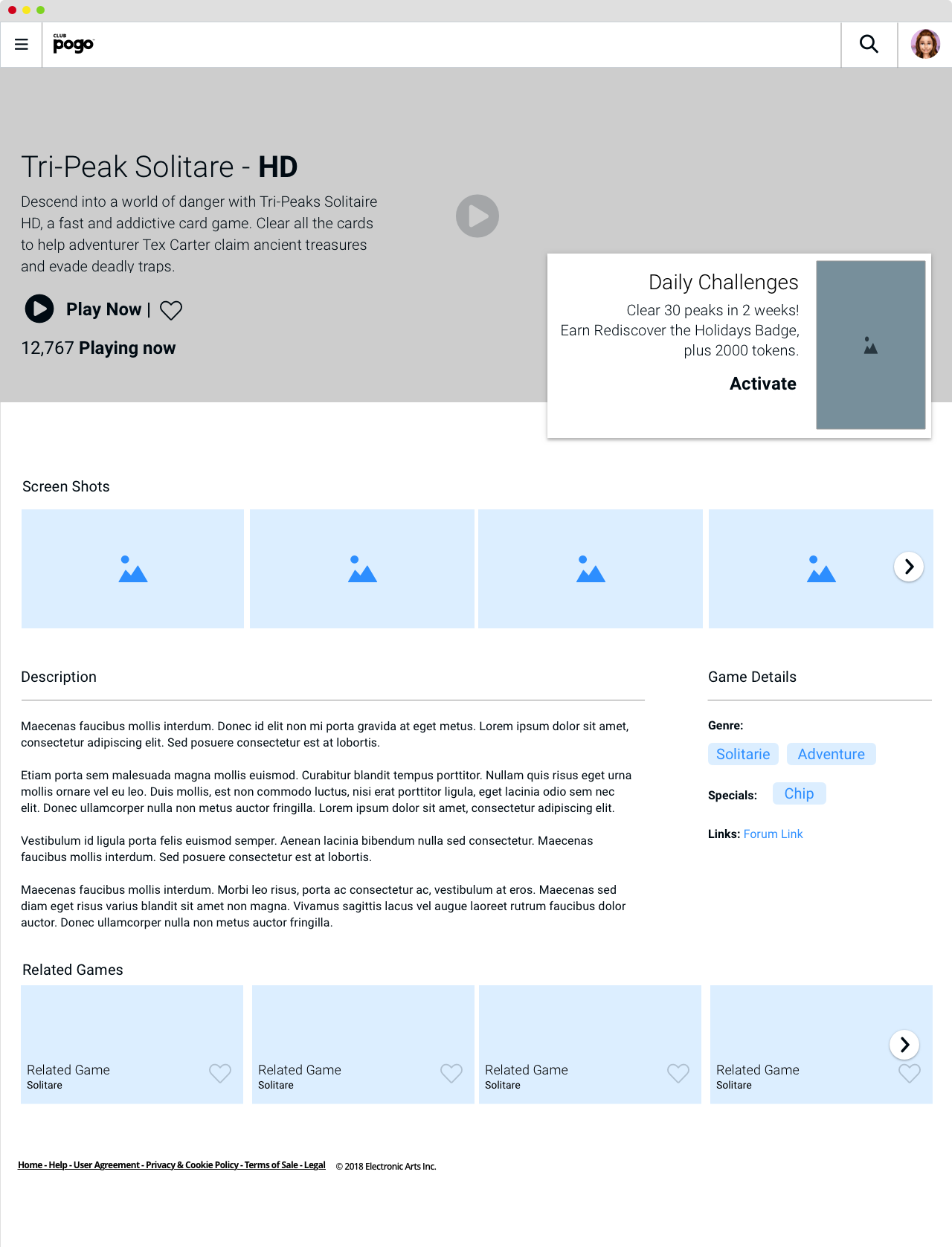
Pogo game detail page before the redesign
Game detail before.
Pogo game detail page after the redesign
Game detail redesign.
Pogo Challenge Central before the redesign
Challenge Central before.
Pogo Challenge Central after the redesign
Challenge Central after.

Interactive recreations

pogo.com
pogo
Find a game
Find a challenge
Account
Martha S. ▾
Navigation: before / after
Home
Games
Club Pogo
Badges
Perks
Jackpots
Insider
Tokens
Profile
Friends
Help
11 visible labels · several levels · users reported avoiding it
Find a game
Browse the catalog
Find a challenge
Active and upcoming
Account
Profile, club, perks
3 primary routes · release-one reconstruction
About · Help · Privacy · Terms© EA Games · Pogo.com
Navigation system
pogo.com
pogo
Find a game
Find a challenge
Account
Martha S. ▾
Home: priority hierarchy
promo banner · 728×90
FEATURED CONTENT
Pogo Daily
Newsletter
Promo Spot
Sale!
Club Pogo Trial
Insider
Forum Posts
Find Friends
Tokens Sale
Bejeweled
Chuzzle
Dice City Roller
Hearts
Lottso! Express
Quinn's Aquarium
Penguin Push
Boggle Bash
NEW + UPDATED
Mahjong Safari
Squelchy
Crossword Cove
Bingo Luau
Daily Crossword
First Class Solitaire
Bingo Luau
First Class
RIGHT RAIL
Daily login bonus
Buy tokens
Subscribe
Refer a friend
Top players
Chat
Help
No hierarchy · ad slots · 4-deep nav drawers · challenges buried 2-3 clicks down
↓ ordered by likelihood the user wants it right now
Current challenges· PRIMARY6 active
Spider Solitaire
02:14:33 left+250
Word Whomp
04:08:12 left+250
Phlinger Phoo
00:46:21 left+150
Tri-Peaks Solitaire
06:31:55 left+250
Mahjong Safari
01:22:09 left+250
Sweet Tooth
03:58:44 left+150
New this week6
Mahjong Safari
tap to play
Squelchy
tap to play
Crossword Cove
tap to play
Bingo Luau
tap to play
Daily Crossword
tap to play
First Class Solitaire
tap to play
Your favorites6
Word Whomp
tap to play
Spider Solitaire
tap to play
Poppit!
tap to play
Bookworm
tap to play
Aces Up
tap to play
Trizzle
tap to play
More from the catalog50+ total
Bejeweled
tap to play
Chuzzle
tap to play
Dice City Roller
tap to play
Hearts
tap to play
Lottso! Express
tap to play
Quinn's Aquarium
tap to play
Penguin Push
tap to play
Boggle Bash
tap to play
Power Cup Soccer
tap to play
Snowboard
tap to play
Pogo Beach Bingo
tap to play
Sudoku
tap to play
Account · Profile · Club Pogo · Tokens · Badgesview all 50+ games →
About · Help · Privacy · Terms© EA Games · Pogo.com
Home page
pogo.com/games/spider-solitaire
pogo
Find a game
Find a challenge
Account
Martha S. ▾
Game card: six data points
Before
thumbnail
Spider Solitaire
Image + title only. No challenge context. Users clicked blind.
After: 6 data points
02:14:33
WEEKLY
Spider Solitaire
Win 5 hands without undo
3 / 5
+250 tokens
01 · Time remaining
02 · Event type
03 · Game type (image)
04 · Challenge
05 · Progression
06 · Reward
About · Help · Privacy · Terms© EA Games · Pogo.com
Game card
pogo.com/games/spider-solitaire
pogo
Find a game
Find a challenge
Account
Martha S. ▾
Game detail: simplified
game art
Card · Solo · Strategy
Spider Solitaire
Classic two-suit Spider with full undo and statistics. Free to play.
Current challenges · PRIMARY4 active
TypeChallengeProgressTime leftReward
DAILYWin 3 hands without undo3 / 302:14:33+50
DAILYScore 1,200+ points in a single game1 / 102:14:33+50
WEEKLYWin 25 games this week14 / 254d 11h+250
MONTHLYReach 500,000 lifetime points243K / 500K21d+1500
About this game
Genre
Card · Strategy
Players
1 · Solo
Difficulty
Easy → Hard
Avg session
6 minutes
Related games
Tri-Peaks Solitaire
tap to play
First Class Solitaire
tap to play
Aces Up
tap to play
Hearts
tap to play
About · Help · Privacy · Terms© EA Games · Pogo.com
Game detail
pogo.com/challenges
pogo
Find a game
Find a challenge
Account
Martha S. ▾
Challenge central: uniform grid
Today
This Week
This Month
Past
Earned
Leaderboards
Help
SHOW: ALL · BY GAME · BY DATE · BY TYPE · BY REWARD · BY DIFFICULTY
DAILY · Spider Solitaire
Win 5 hands without undo to complete this challenge and earn rewards
04:12
+50
view ›
WEEKLY · Word Whomp
Win 5 hands without undo to complete this challenge and earn rewards
2d 04h
+250
view ›
DAILY · Phlinger Phoo
Win 5 hands without undo to complete this challenge and earn rewards
06:48
+50
view ›
MONTHLY · Tri-Peaks
Win 5 hands without undo to complete this challenge and earn rewards
14d
+1500
view ›
WEEKLY · Mahjong Safari
Win 5 hands without undo to complete this challenge and earn rewards
4d 11h
+250
view ›
DAILY · Squelchy
Win 5 hands without undo to complete this challenge and earn rewards
09:21
+50
view ›
WEEKLY · Crossword Cove
Win 5 hands without undo to complete this challenge and earn rewards
6d 02h
+250
view ›
MONTHLY · Poppit!
Win 5 hands without undo to complete this challenge and earn rewards
21d
+1500
view ›
7 tabs · 6 sort dimensions · long-form list · users bookmarked their game and skipped this page
Daily
Spider Solitaire
04:12+50
Weekly
Word Whomp
2d 04h+250
Daily
Phlinger Phoo
06:48+50
Monthly
Tri-Peaks
14d+1500
Weekly
Mahjong Safari
4d 11h+250
Daily
Squelchy
09:21+50
Weekly
Crossword Cove
6d 02h+250
Monthly
Poppit!
21d+1500
Daily
Sweet Tooth
02:55+50
Weekly
Trizzle
3d 19h+250
Daily
Aces Up!
11:03+50
Monthly
Lottso! Express
8d+1500
About · Help · Privacy · Terms© EA Games · Pogo.com
Challenge central
9:41● ●● ▼
pogo
Games
Challenges
Account
Active · 3
Spider Solitaire
02:14:33 left
+250
Word Whomp
04:08:12 left
+250
Phlinger Phoo
00:46:21 left
+250
Continue playing
Word Whomp
Mahjong
360px · 4-col grid
Same content model as desktop. The 16-column grid collapses to 4. Three-flow nav becomes a tab bar at the top. Current challenges stay primary because they are why Martha came back.
↳ Persona use case
↳ Slow connection
↳ Older device
↳ One-handed read
Mobile home
24 / Design decisions

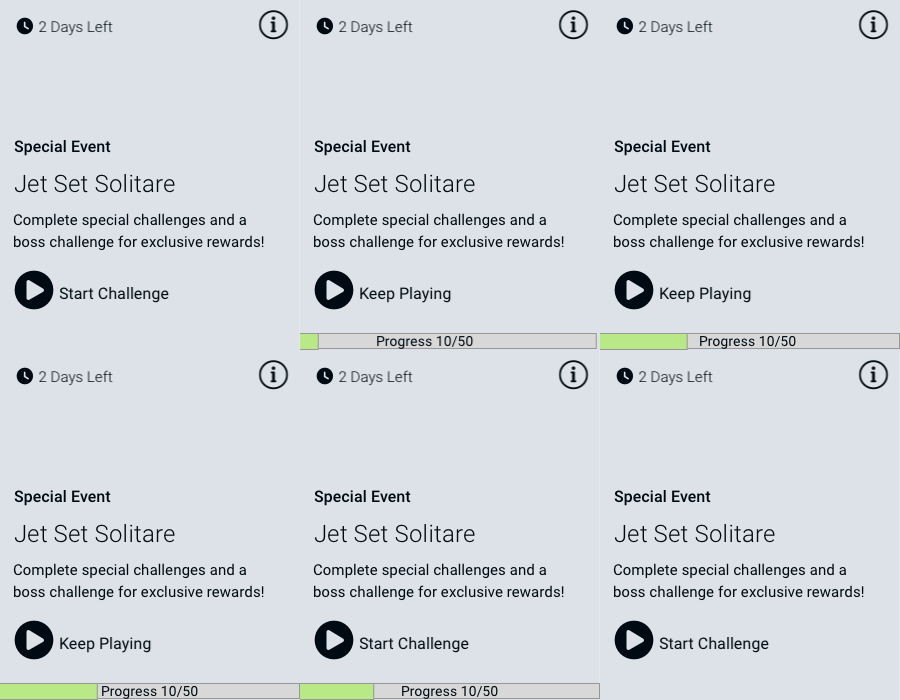
Six fields on every challenge

Time remaining, event type, game identity, task, progress, and reward were the data points players repeatedly said they needed. Keeping them together prevents the card from becoming a decorative tile.

Four responsive grids

Analytics and engineering set support at four columns on mobile, eight on portrait tablet, twelve on landscape tablet, and sixteen on desktop, with breakpoints at 360, 600, 960, 1280, and 1600 pixels.

Details by demand

The game page leads with play and active challenges. Everything else sits behind a blade so the default page serves the reason players opened it.

Shared browse pattern

Category and Challenge Central use the same grid because both help a player find something to play. The content differs; the wayfinding job does not.

Front of the animated Pogo challenge card study
Challenge card front, surviving motion study.
Pogo game detail blade opening to reveal more information
Game-detail blade, surviving motion study.
25 / Validation

Research before release, feedback after launch.

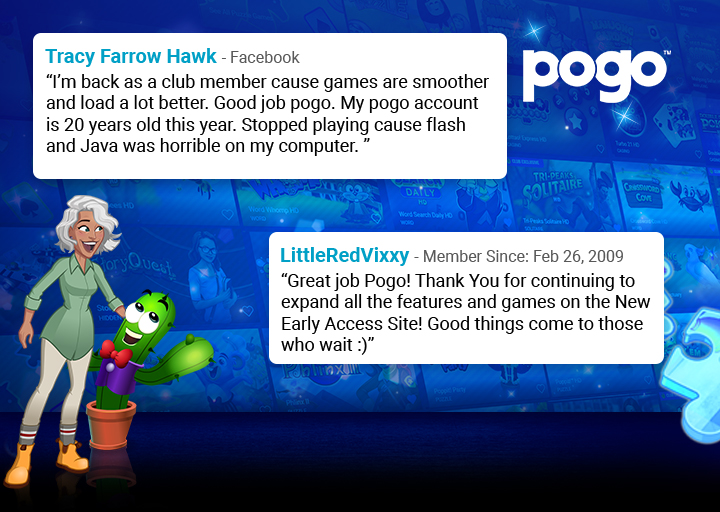
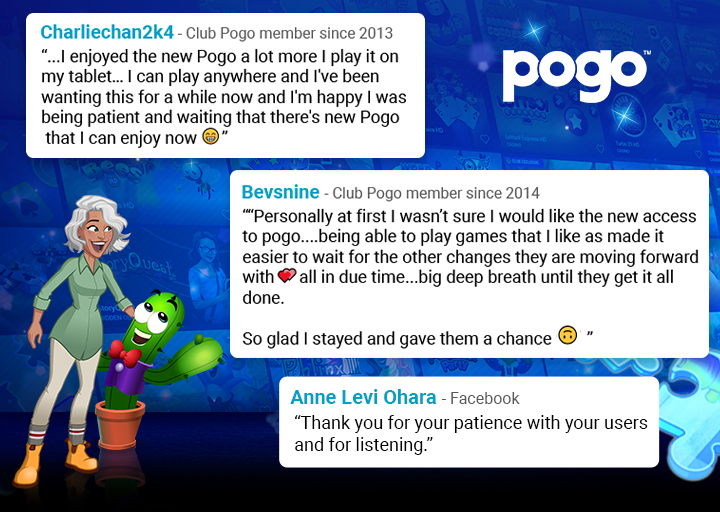
The archive preserves the 3,400-player survey method, the follow-up interview range, and two positive feedback captures after launch. It does not preserve a formal usability report or a quantified post-launch behavior change.

Player feedback about the redesigned Pogo experience
Post-launch player feedback, source capture.
Second player feedback capture about the redesigned Pogo experience
Post-launch player feedback, source capture.

Evidence summary

Evidence by the numbers
$30M
Annual revenue
pre-redesign baseline
50+
Games in catalog
across card / word / puzzle / arcade
20+
Years live
before this design pass
3,400
Surveyed
paying + free subscribers
7-10
Video sessions
device usage + flows + motivation
>50%
Footprint cut
at first release
The project record documents a global March 2020 launch and positive player feedback. It does not preserve a quantified retention or revenue delta, so none is claimed here.
Evidence summary
26 / Learnings

What I would do the same way.

  • A current-state map can make the release decision before a new screen is drawn.
  • For an established audience, explicit labels can matter more than new visual language.
  • A shared pattern earns its place when two pages support the same user job.
  • Phasing is a product decision, not a scheduling detail.
  • I handed the work off during detailed visual design as development began. The case separates my design work from the later build and global launch.